Cordless • Rechargeable • 60-second clean

Miracle Smile Water Flosser: the deep clean string floss keeps missing

A steady pulse of water reaches between every tooth, behind the back molars and just under the gumline — the three places a brush and a strand of thread quietly give up on. One tank, about a minute, and your mouth feels like it does after a hygienist appointment.

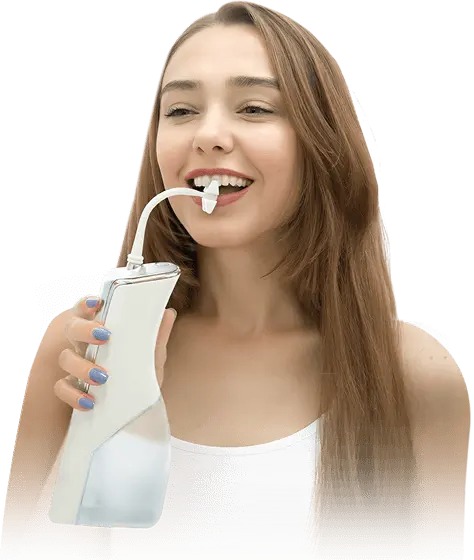
Woman smiling while cleaning between her teeth with the Miracle Smile cordless water flosser

60 sec

daily routine

Cordless

no plug at the sink

Multi-mode

pressure you control

Travel-ready

tank empties flat

Brushing cleans three of the five surfaces on every tooth

Every tooth has five faces: the outer cheek side, the inner tongue side, the chewing top, and the two flat walls that press against the neighbouring teeth. A toothbrush handles the first three well. It cannot enter the last two, because the gap is narrower than any bristle can travel and the contact point at the top of that gap is tight by design. That is where breakfast stays. Left alone, the soft film on those walls organises itself into plaque within a day, hardens into tartar within a couple of weeks, and starts pressing on the gum margin. The gum answers the only way it knows how: it swells, reddens and bleeds when touched.

Nearly everyone has been told to floss for this reason, and nearly everyone stops. Not out of laziness — out of friction. Thread is awkward behind the molars, it snaps on tight contacts, it shreds around a bridge, it hurts if you push too hard, and it is genuinely difficult to do well with braces, retainers or arthritic hands. A technique you abandon by Wednesday protects nothing.

The Miracle Smile Water Flosser removes the friction instead of asking for more willpower. Water is a better shape than thread for the job: it is infinitely flexible, it fills the whole space rather than tracing one line through it, and it reaches the shallow pocket where gum meets tooth — roughly a couple of millimetres deep, invisible, and the exact place gum trouble begins. The pulses do two things at once. The pressure loosens and flushes debris out; the rhythm gently stimulates the gum tissue and the blood flow that keeps it firm.

You feel the difference immediately, which matters more than any specification. The slick film along the back of the lower front teeth goes. Morning breath softens, because most of it comes from bacteria feeding on trapped food rather than from your stomach. And the routine costs you a minute, standing over the sink, doing something that feels closer to a rinse than a chore.
How the water does the work

There is no mystery inside the handle. A small motor drives a pump, the pump pushes water from the tank through a narrow nozzle, and the narrowing turns a gentle flow into a focused, pulsing jet. Three properties of that jet do the cleaning.

Pressure that lifts, not scrapes

The stream arrives with enough force to break the sticky bond holding soft plaque to enamel, but it spreads that force over a wide wet area instead of a hard edge. Nothing is abrasive, so enamel and gum tissue are not being sanded down the way an over-enthusiastic brush or a snapped strand of floss can do.

Pulses that flush

A continuous stream would simply push debris deeper. Rapid pulses create a push-and-release rhythm: each pulse dislodges, each gap between pulses lets water and debris escape. That rhythm is also what makes the sensation feel like a massage rather than a spray.

A shape that follows the tooth

Water takes the form of whatever space it enters. Around a molar's curve, under a bridge, behind a bracket, into the sulcus beneath the gum edge — the jet arrives everywhere the opening allows, without you having to find an angle by feel.

Built to be used every single day

A tool only improves your mouth if it survives contact with a real morning. Every design decision here points at the same goal: fewer reasons to skip it.

Fully cordless

No cable stretched across the basin, no fixed spot on the counter. Pick it up, clean, put it down. Because it goes where you go, it also works in a shower or in front of a mirror away from a socket.

Rechargeable battery

Charge it and forget it for days of normal use. There are no batteries to buy, and a full charge before travelling covers a weekend away without the cable coming with you.

Multiple pressure modes

A soft setting for sensitive or recovering gums, a standard setting for everyday cleaning, and a stronger pulse for stubborn areas and dental work. Your gums change week to week; the pressure should follow.

Detachable, rotating tips

Tips lift off for rinsing, swap out for each family member, and rotate so you can reach the inside of the back molars without contorting your wrist.

Water-resistant body

The handle is built for a wet environment. Splashes, condensation and a rinse under the tap are all part of normal use rather than a risk.

Slim, upright tank

Enough water for a full pass across both arches, in a body narrow enough to hold comfortably in one hand and stand on a crowded shelf.

Quiet operation

A muted hum rather than a whine, which matters when someone else in the house is still asleep on the other side of the bathroom wall.

Simple, one-button control

Power and mode live under a single thumb. Nothing to learn, nothing to unlock, no screen to read while your mouth is full of water.

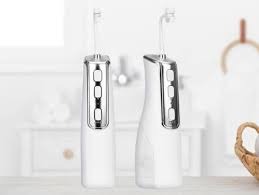
Two Miracle Smile water flosser handles standing on a bathroom shelf
Clean white and chrome body, designed to be left out on the shelf rather than hidden in a drawer.

A design that stays out where you can see it

Habits are built by visibility. The health products that get used are the ones sitting next to the toothbrush, and the ones people hide because they look like hospital equipment get used twice. The Miracle Smile handle was drawn to earn its place on an open shelf: an upright soft-white body, a brushed chrome control panel, a flat base so it stands on its own, and a footprint about the size of an electric toothbrush.

Practical details follow from that. It balances in the hand when the tank is full, so your wrist is not fighting the weight while you work along the back teeth. The tank empties completely, which means it packs dry for a suitcase instead of leaking into your clothes. And the whole thing takes one hand, so the other stays free for the tap or a towel.

Order Now

Your sixty-second routine, step by step

  1. 1

    Fill the tank with lukewarm water

    Cold water on an exposed root or a sensitive spot is a small shock that makes you rush. Lukewarm is comfortable and lets you slow down, which is what actually cleans. Fill to the line — more than that just spills when you tilt the handle.

  2. 2

    Lean over the sink and part your lips

    This is the one step beginners skip, and it is the whole difference between a tidy clean and a wet shirt. Bend forward, put the tip in your mouth, then let your lips rest slightly open so water runs straight out into the basin while the flosser keeps working.

  3. 3

    Start on the lowest setting, at the back

    Switch on with the tip already in your mouth. Begin at the furthest back tooth on one side, because that is the area you are most likely to hurry through if you leave it for last. Hold the tip near the gumline, roughly at a right angle to the tooth.

  4. 4

    Trace the gumline, pausing at every gap

    Move along one arch tooth by tooth, letting the water sit in each space for a beat or two before sliding on. Follow the outer surfaces of the upper teeth, then the inner surfaces, then repeat on the lower arch. Keep the tip moving; parking it in one spot at high pressure is what makes gums sore.

  5. 5

    Give dental work a second pass

    Braces, a bridge, a crown margin or an implant collects more than a plain tooth does. Go back over those areas once, above and below the wire or along the join, and you have covered the places that cause most problems later.

  6. 6

    Empty, rinse and air-dry

    Tip out any water left in the tank, rinse the tip under the tap, wipe the body and stand it upright with the tip off or loose. Standing water is the only real enemy of a device like this, and thirty seconds of drying prevents it.

Who feels the difference fastest

Everyone benefits from cleaning between their teeth. Some mouths, though, change noticeably within the first week or two.

Braces and aligner wearers

Wires and brackets turn every tooth into a shelf. A water jet gets above and below the wire in seconds, where thread has to be re-threaded tooth by tooth.

Implants, bridges and crowns

The join between dental work and gum is the vulnerable line. Flushing it daily is the cheapest possible protection for expensive work.

Tender, bleeding gums

Gums that bleed when brushed are usually inflamed rather than damaged. Gentle daily irrigation and stimulation is exactly the routine hygienists ask for between visits.

Tight contacts and crowding

Where teeth overlap, floss snaps or refuses to pass. Water enters from whichever side is open and cleans the trapped surface anyway.

Anyone who hates flossing

The best interdental routine is the one you repeat. If thread has never lasted a fortnight for you, a rinse that takes a minute probably will.

Kids, seniors and limited dexterity

No pinching, winding or reaching. Hold a handle, point it at the gumline, move slowly — a technique most people learn on the first try.

Water flosser, string floss and mouthwash

These three are often treated as alternatives, but they do different jobs. Knowing which job belongs to which tool is what makes a routine efficient.

What mattersMiracle Smile Water FlosserString flossMouthwash
Reaches between teethYes, fills the whole gapYes, one flat lineRinses the surface only
Cleans under the gum edgeYes, gentle pulsesPartly, with good techniqueNo
Works with braces and bridgesComfortablySlow and fiddlyNo debris removal
Time for a full mouthAbout 60 secondsTwo to three minutes30 seconds
Comfort on sore gumsAdjustable pressureOften causes bleedingCan sting
Habit survival rateHigh — it feels easyLow for most peopleHigh but least effective

The honest summary: brushing is non-negotiable, water flossing is what makes the gaps and the gumline genuinely clean, and mouthwash is a finishing touch that freshens but removes almost nothing. If you only add one thing to brushing, add the water.

Keeping it working for years

A water flosser lives in the wettest room in the house, so its maintenance is all about drying rather than scrubbing. Empty the tank after every session — water left standing overnight is what grows a smell and, over months, a film inside the tubing. Wipe the outside with a soft cloth, and leave the tip out of its socket so air can move through it.

Once a month, deal with mineral scale, especially in a hard water area. Fill the tank with warm water and a splash of plain white vinegar, run it through into the sink until the tank is empty, then flush twice with plain water. That clears the chalky build-up that slowly narrows the nozzle and softens the pressure.

Replace tips periodically. Nozzles are small precision openings; once the end is scratched, chipped or misshapen, the jet widens and loses its focus. Give every regular user their own tip, and keep them apart when drying so nothing is shared.

Charge the battery before it is completely flat where you can, store the unit upright, and avoid leaving it in direct sun on a hot windowsill. Keep salt solutions, undiluted mouthwash, essential oils and anything gritty out of the tank — those are the three habits that shorten the life of the seals and the pump more than daily use ever will.

Frequently asked questions

How is a water flosser different from string floss?

String floss scrapes a flat surface against the sides of two teeth. A water flosser sends a pulsating jet of water into the same space, plus the pocket just under the gumline that string usually skips. The stream follows the natural curve of each tooth, wraps around crowded areas and rinses debris out instead of dragging it along. Most people also finish faster, which is the real reason it turns into a daily habit.

Can I use the Miracle Smile Water Flosser with braces, implants or bridges?

Yes. Dental work is exactly where a water stream earns its keep. Wires, brackets, bridge undersides and implant abutments create shelters that floss thread struggles to reach. Guide the tip slowly along the bracket line and under the wire, let the water do the work, and finish along the gumline. Start on a lower pressure setting until you learn how your appliance responds.

Is it safe for sensitive gums?

Begin on the gentlest setting with lukewarm water and keep the tip moving. Sensitive gums are usually inflamed gums, and inflamed tissue can bleed a little in the first week as it gets cleaner. If bleeding continues past a couple of weeks, or if any spot is painful rather than tender, ask your dentist to look at it. A water flosser is a hygiene tool, not a treatment for gum disease.

How long does a full mouth take?

About sixty seconds once you have the routine down. Work in a fixed loop — outer upper, inner upper, outer lower, inner lower — pausing for a beat between every pair of teeth. The tank holds enough water for a complete pass, and refilling mid-clean usually means the pressure is higher than it needs to be.

Does it replace brushing?

No. Brushing cleans the broad surfaces of your teeth; flossing cleans the narrow gaps and the gumline where a brush head physically cannot fit. Use them together. Most people brush first, then floss with water so the rinse carries away everything the brush loosened.

How long does the battery last?

The rechargeable battery is built for multiple days of daily use per charge, so it lives on the bathroom shelf rather than tethered to an outlet. Charge it fully before a trip and it will comfortably see out a long weekend without the cable.

Can I add mouthwash to the tank?

A diluted, alcohol-free rinse is fine occasionally. Always follow it with a tank of plain water so nothing sugary or sticky sits in the pump and tubing. Never use undiluted rinse, salt solutions, essential oils or anything abrasive — those shorten the life of the seals.

Is it messy to use?

Not once you learn the trick: lean over the sink, keep your lips slightly parted and let the water run out as you go instead of holding it in your mouth. Beginners who close their lips fully are the ones who end up wearing the first tank.

Can the whole family share one unit?

Yes, as long as everyone has their own tip. Tips detach for exactly this reason. Rinse and air-dry them separately, and give the tank a fresh fill for each person.

How do I keep it clean over time?

Empty the tank after every session so water is never standing inside it, wipe the body dry, and let the tip air out rather than sealing it in a travel case damp. Once a month, run a tank of warm water with a splash of white vinegar through the unit to clear mineral scale, then flush with plain water twice.

One minute a day, for the parts of your mouth you have never really cleaned

Gum health is not won by effort — it is won by repetition. The Miracle Smile Water Flosser exists to make the repetition easy: fill, lean, trace, done. Order yours and feel the difference on the first pass.